The Brown Pelican’t and the Ghost Gear of Christmas Past
*Hint* Click the above thumbnails to view and/or download high res pics from this article.

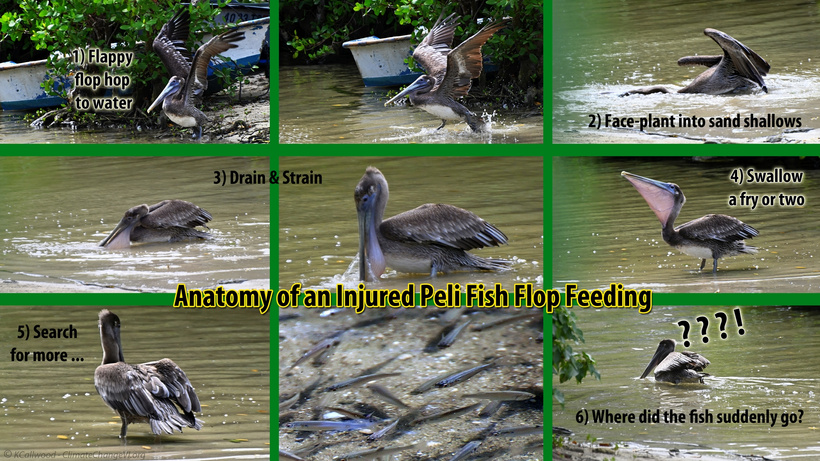
This pelican is going to die.
“Why”? You may ask, “Why, oh why”?
A fisher-person was careless
And left a fishhook tangled mess.

This pelican can no longer fly
At least not that well or high
Impaled by a fish hook and line
Through and around its wing entwined.

Thus no longer can it dive and eat
Or other birds get to meet.
It will not live to mate and breed,
So awful was this careless deed.

A cast was thrown into Mangrove shrub
A foolish mistake or flub?
And then line cut and not retrieved
That captures birds that won’t be freed.

Don’t line cast towards the rocks or trees.
Leaves and branches it will seize.
And only birds the hook will kill.
Not quick, mind you, but starve they will.


This pelican eats now from the shore
Dipping bill for less, not more.
Scoop, scoop it does for new born sprat
In shallow water and mud flat.


This pelican is going to die
Barely eating tiny fry.
We fish to eat and so do they.
So don’t leave ghost gear in their way.


Images taken Jan 2, 2021
Holidays are a favorite time for residents and visitors alike to rush to Mandahl Bay, St. Thomas, Virgin Islands for recreational fishing activities. During this period recreational and sustenance fishers account for a four-fold increase in area fishing activity. One of the reasons the area is protected is so that people can continue to have a place where they can feed themselves.
But the fish and wildlife we depend on will not survive the mess many visitors leave behind … especially following holiday migration events.
This year, seasonal changes and migrations were delayed due to lack of rain. This meant that these last couple Christmas weeks finally saw the migration of most adult fry, sprat and shad into the Atlantic Ocean.
These fish tend to head out into open waters when the Eco-system has become too crowded for all of them to seek the protection of Red Mangrove roots. The remaining adults now have room in their habitat to hide from predatory birds and large fish.
This fry, sprat and shad behavior also means that there are less of the larger fish in open areas of the lagoon. The big fish swim close to the root edges hoping to catch any careless prey that wander too far from root cover.
Fisherpersons, in turn, fly cast towards the mangrove roots hoping to hook a big fish. When they cast too hard or misjudge the wind, their line and hook become entangled in the roots and branches. Others are careless about paying attention to shrubbery behind them and accidentally snag trees on their back-cast. Irresponsible fishers cuss and cut the line, leaving it there to kill life for months and even years!

Responsible people, after such an accident, work patiently to shake free
the line or they go out and get it! Once wildlife becomes entangled, it is usually too late to save the animal. Personally, I lack the training, certification and equipment to rescue these animals. We all know that the VI Government also lacks the resources to continually mount animal rescues.
Ghost gear retrieval and removal is a solo project that I undertake every few months. It is what I call D.E.A.D. work (Difficult, Expensive And Dangerous) especially if I need to don SCUBA gear to free netting and what not from roots and rocks in near zero visibility lagoon water.
Please, let’s give wildlife a chance to recover. Fish responsibly!!!
***IMPORTANT NOTE***
♦ Camp Umoja remains closed to camping and campus visits as we continue Hurricanes Irma and Maria repairs and renovations.
♦ Youth programs and lagoon tours are also on hold until we are clear of COVID-19.
• Observational research, conservation activities and lagoon cleanups are unaffected and on-going. We continue to rely on support from Patrons like you to keep our vital work going! : )