A Rained Out Week … so we’ll nostalgia underwater – Includes Bonus 1 of 2!
It seems as if mother nature conspired against me last week. Each trek down to Mandahl Bay was greeted by healthy rain showers. At home , cutting the grass did not help much either. Now I am having pollen sneeze fits … which of course does not scare the willies out of people during this COVID thing. 🙁 It also left me a bit hoarse for narrating, so I’ve just embedded some inspiring music with a Spotted Eagle Ray video for this week.
Spotted Eagle Rays (Aetobatus Narinari) are common in Virgin Islands waters, but quite shy. So, it is always a treat whenever one of these graceful giants visits me during a dive. They represent the largest of our island’s stingrays, and I’ve encountered 10-footers in Mandahl’s shallows.
The ray in the video was heading out to the depths of the south side. A bright, sunny day with fantastically clear waters, allowed me to shoot from 50 feet distant. I had nothing against which to gauge this ray’s size, but could tell that it was large, old and ‘weather-beaten’. This lady is a survivor.
Take note of the battle-shortened tale. Was it by encounter with a predator, such as a large shark or dolphin? Could it have encountered a boat prop? The ventral tip of its left wing has suspicious straight cuts … we can only speculate as to the cause.
In the scene we can also clearly note the five stinging barbs at the base of the tail. Spotted Eagle Rays are not considered dangerous to humans.
BONUS CONTENT 01 … FOR YOUR DESKTOP

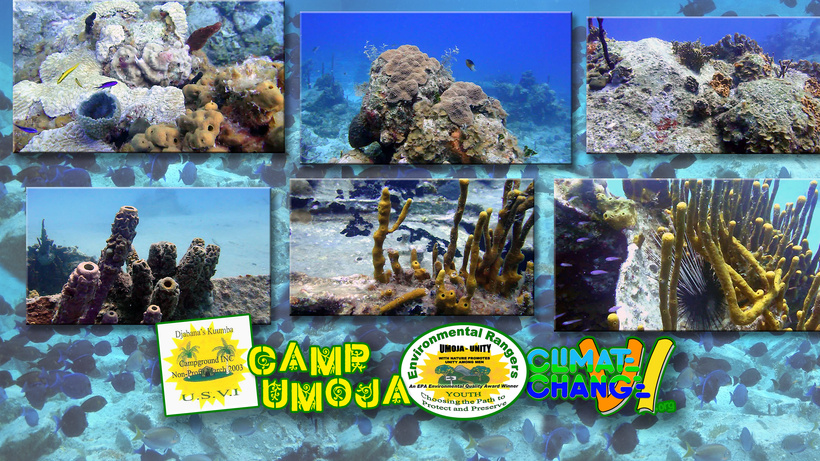
Since I could not get any successful shots of Mandahl this week, I’ll bonus you with a couple of desktop wall papers of our local patch coral reefs. Patch corals (isolated clusters of coral in otherwise flat sand or grass bed regions) form critical protective habitats for juvenile fish. They also serve as cleaning stations for fish traveling from one feeding area to another. Think of gas stations/rest stops dotted along interstate highways. Fish moving from one bay or reef system to another can avoid long and dangerous open-ocean treks.

Patch reefs also serve as habitats for sponges, shrimp, urchins, anemones and a large variety of other mollusks and crustaceans. Save these images and enjoy as your desktop underwater background.
See post “Rained Out Week – Bonus 2 of 2” your your second bonus!