↓
 
  • ABOUT US
  • ECO-YOUTH
    • CAMP UMOJA
    • ENVIRONMENTAL RANGERS
      • Environmental Heritage S.E.E.R. Program
  • WILDERNESS LIBRARY
  • PROJECTS
    • CAMPGROUND PROJECTS
    • COMMUNITY OUTREACH
      • Camp Umoja Stellar Observatory
    • RESEARCH PROJECTS
      • MANDAHL BAY APC WILDERNESS PRESERVE 360 Underwater Cam
      • MANDAHL BAY APC WILDERNESS PRESERVE Aerial Eco-System Survey
  • SUPPORT CAMP UMOJA

Climate Change V.I.

Climate Change V.I.→Categories Fish & Wildlife

Category Archives: Fish & Wildlife

Bearded Fireworm – VI Wildlife Flashcard

December 7, 2019 by Karl Callwood Posted in Animalia, Bearded Fireworm, Hermodice carunculata, Dangerous Organisms, Fish & Wildlife, Marine Creatures Tagged Atlantic Ocean, bearded fireworm, bristleworm, Caribbean, dangerous marine life, dangerous organism, hermodice carunculata, lagoon life, marine organism, tropical

Smooth Billed Ani – VI Wildlife Flash Card

December 6, 2019 by Karl Callwood Posted in Animalia, Birds and Fowl, Fish & Wildlife, Kingdoms of Life, Virgin Islands Wildlife Flash Card, Wildlife Education Tagged Crotophaga ani, flashcard, native, predator, Smooth-billed Ani, tropical birds

The Sand Diver: A Lizardfish!

Climate Change V.I.

 Sand Diver (Lizardfish) Scientific Name: Synodus intermedius • Common throughout Virgin Islands Waters • Thought to be the most abundant of local lizardfishes SIZE4 inches to 18 inches DEPTHI have most commonly observed them … Continue reading →

Posted in Fish - Caribbean & Reef, Fish & Wildlife, Video of the Day, Video of the Day | Tagged Actinopterygii, Animalia, aulopiformes, Chordata, Lizardfish, Sand Diver, Synodontidae, Synodus intermedius | Leave a reply

Atlantic Swordfish Landings Through May 31, 2018

Climate Change V.I.

June, 11 2018 Atlantic Swordfish Landings Update:  Commercial and Recreational Through May 31st The table below provides preliminary landings estimates and remaining quotas as of May 31, 2018, for the Atlantic swordfish fisheries for the … Continue reading →

Posted in Caribbean Fisheries Management Council, Federal Government, Fish - Caribbean & Reef, Fish - Caribbean and Reef, Fish & Wildlife, Fisheries, Highly Migratory Species, NOAA | Tagged Caribbean fisheries, fisher, fishing, Highly Migratory Species, NOAA

The Spanish Lobster, Scyllarides aequinoctialis

Climate Change V.I.

The Spanish Lobster, Scyllarides aequinoctialis, also known as Shovel-nosed Lobster, is a slipper lobster common to Virgin Islands waters. They are not often seen during the day which is when they hide out in holes … Continue reading →

Posted in Animalia, Fish & Wildlife, Marine Organisms, Reef Creatures, Video of the Day, Video of the Day | Tagged Arthropoda, Crustacea, Decapoda, Scyllaridae, Scyllarides aequinoctialis, Shovel nose lobster, slipper lobster, Spanish Lobster

Coral

Climate Change V.I.
Continue reading →
Posted in Coral

Reef Creature

Climate Change V.I.
Continue reading →
Posted in Animalia, Kingdoms of Life, Marine Organisms, Reef Creatures

Fish – Caribbean and Reef

Climate Change V.I.
Continue reading →
Posted in Animalia, Fish - Caribbean and Reef, Fish & Wildlife, Kingdoms of Life, Marine Organisms

Watch this Caribbean Reef Squid Flash its Spots

Climate Change V.I.

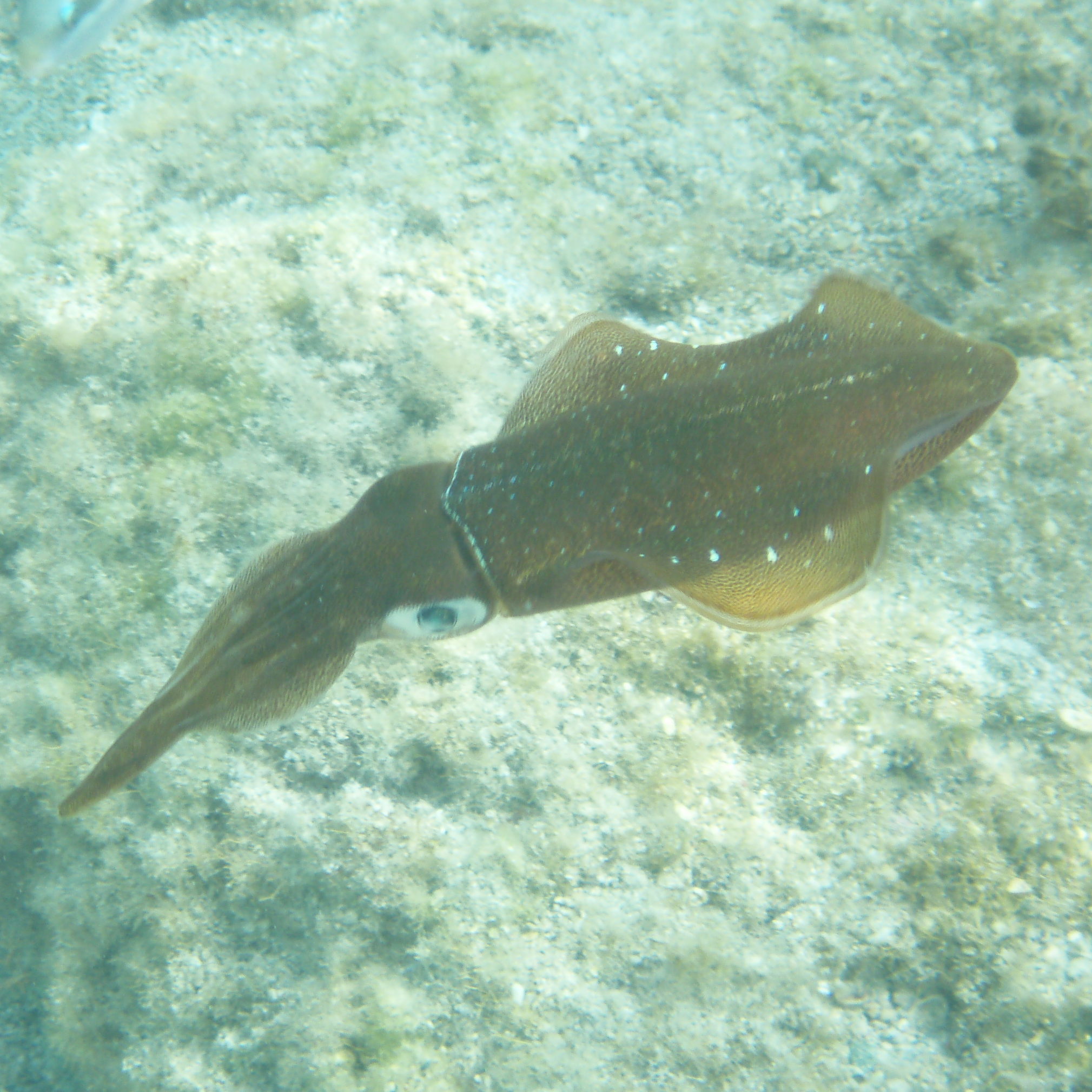
Full moon, Coral Bloom and Spring downpour … look around with keen eyes while snorkeling or diving and you may just spot a few Caribbean Reef Squid.

Fairly common in St. Thomas, Virgin Islands waters, they can be difficult to see as their colors naturally blend with the water and suspended particles. Adding to the near-invisibility is the fact that the Caribbean Reef Squid is not that big, averaging six to 12 inches as adults.

If you are lucky enough to spot one, you may even be able to see it change colors and flash dot patterns as it communicates with nearby squid. Wary by nature, they may stick around for observation by a swimmer making a slow and unthreatening approach.

Caribbean Reef Squid will let divers know if they have come to close by wagging a crooked tentacle in the air and jetting away as seen at the end of the video.

CARIBBEAN REEF SQUID PAGE

Posted in Benthic Heritage, Caribbean Reef Squid, Fish & Wildlife, VI Benthic Heritage, Video of the Day, Video of the Day, Wildlife Education | Tagged Animalia, Caribbean Reef Squid, Cephalopoda, loliginidae, Mollusca, Sepioteuthis, Sepioteuthis sepioidea, Teuthida

The Tobaccofish

Climate Change V.I.

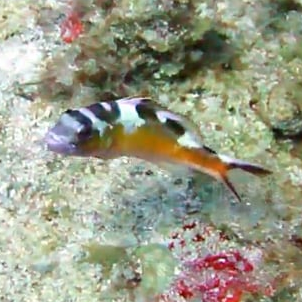
This is a small tropical fish in the Grouper/Sea Bass/Hamlet family. Adults are 2 to 4 inches in length and most commonly seen around St. Thomas in deeper coral waters. It is rarely seen at shallow depths (15 to 40ft), becoming more common approaching 60 feet and below down to about 220 to 250 feet.

They will hang out as solitary individuals among coral rubble, sandy areas, patch reefs and lower levels of coral banks. Juveniles may hang out together in small groups of up to four fish.

Posted in Fish & Wildlife, VI Benthic Heritage, Video of the Day, Video of the Day | Tagged Animalia, Chordata, grouper, hamlet, Perciformes, Sea bass, Serranidae, Serranus, Serranus tabacarius, Teleostei, Tobaccofish

Queen Triggerfish (Old Wife) Eats Sea Urchin

Climate Change V.I.


Queen Triggerfish a/k/a Old Wife

Balistes vetula
 
A sloping snout combined with ultra-tough skin makes the Queen Triggerfish the perfect predator of Sea urchins.
 
Better known as “Old Wife” in the islands, the fish blows pressurized streams of water at an urchin until it tumbles over. Once the urchin’s unprotected underbelly is exposed, the Old Wife digs in with hard, sharp teeth.
 
Fish are both opportunistic as well as sloppy eaters. Scraps from the urchin meal attract nearby fish. Very quickly the Old Wife has to defend its meal from pirates. A wide, flat body helps with this task by blocking fish intent on raiding lunch.
 
In the end, everyone gets something, even if it is just a leftover spine to munch on.
Posted in Fish & Wildlife, Video of the Day, Video of the Day | Tagged Actinopterygii, Animalia, Balistes, Balistidae, Chordata, Old Wife, Queen Triggerfish, Tetraodontiformes, vetula

This fish discovered an awesome way to recycle a seashell

Climate Change V.I.

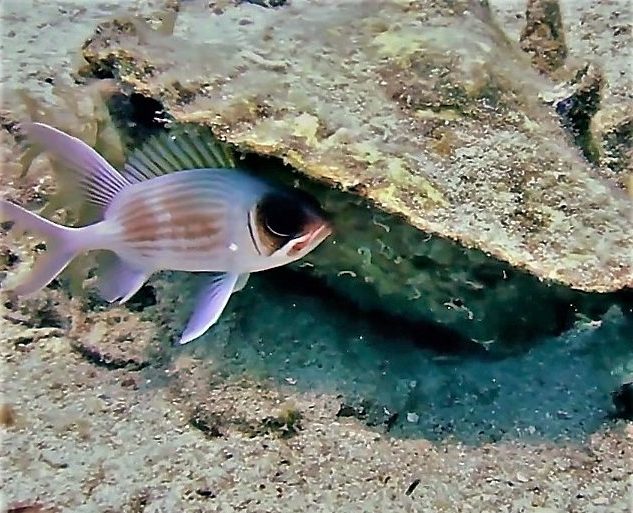
The ocean naturally recycles itself. In the Virgin Islands we recognize that fact and have made it illegal to remove natural objects from beaches and shorelines. This includes seashells, coral, natural drift wood, seaweed, pebbles, sand, etc. If it belongs there, leave it there.

~ Longspine squirrelfish – Holocentus rufus


*Any alteration to shoreline, no matter how small, requires a permit. Inquire at the Virgin Islands Department of Planning and Natural Resources.*

Posted in Benthic Heritage, Fish & Wildlife, VI Benthic Heritage, VI Benthic Heritage Series, Video of the Day, Video of the Day, Wildlife Education | Tagged ~ Longspine squirrelfish, Holocentus rufus, pot fish

EAST hosts Annual V.I. Humpback Whale Watch Eco-tours

Climate Change V.I.

It is time for the Annual EAST Whale Watches 2017. Join the Environmental Association St. Thomas -St. John (EAST) for our annual St. Thomas, Virgin Islands whale watches on Sunday, March 5 and Saturday, March … Continue reading →

link

Junior Spotted Eaglerays swim in formation in a Mangrove Lagoon

Climate Change V.I.
©karlcallwood. Donor use permitted.

Junior Spotted Eaglerays swim in formation in a Mangrove Lagoon. ~ January 18, 2017. The Climate Change VI team has been following four very young Spotted Eaglerays (Aetobatus narinari)* in the Mandahl Bay, St. Thomas, … Continue reading →

Posted in Benthic Heritage, Caribbean Fisheries Management Council, Fish & Wildlife, NOAA, Research & Exploration, Spotted Eagleray, VI Benthic Heritage | Tagged Aetobatus narinari, Caribbean fisheries, cartiliginous fish, Eagleray, rays, sharks, spotted eagleray

OSPREY DOWN: A TWILIGHT RESCUE

IT WAS LATE SUNDAY AFTERNOON, October 30, when I got the call. For some time Anna and Alcedo “Justin” Francis had been observing a large bird-of-prey sitting on the narrow rocky shoreline of Tutu Bay. … Continue reading →

October 31, 2016 by Karl Callwood Posted in Animal Rescue, Environmental Rangers, Fish & Wildlife
Climate Change V.I.

  The Brown Garden Eel Heteroconger longissimus   Conger Eels: Brown Garden Eel – Heteroconger longissimus. Colonies with dozens to thousands of individuals inhabit sand flats with nearby reefs, depth 15 feet to over 200. … Continue reading →

Posted in Fish & Wildlife | Tagged Brown Garden Eel
Afridrilles
@stepix412

Get Exclusive Music and Early Releases

Support ClimateChangeVI on Patreon
Become a patron at Patreon!
©2026 - Climate Change V.I. Privacy Policy
↑